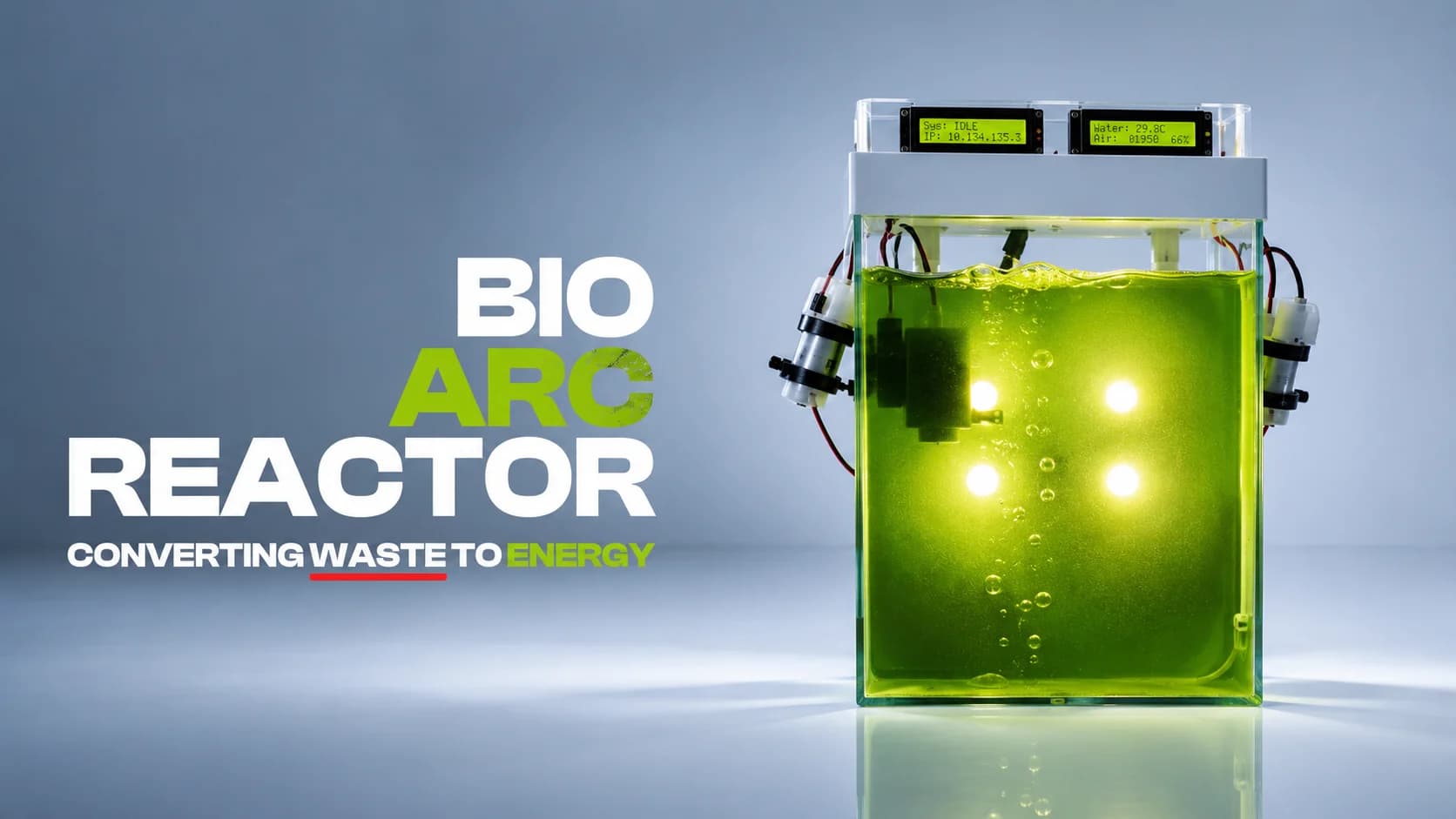
BioArc is an autonomous, IoT-enabled photobioreactor designed for the cultivation of Macroalgae and wastewater bioremediation.
An intelligent, full-stack IoT operating system for high-density microalgae cultivation, real-time biophysical telemetry, and carbon capture analytics.
BioArc bridges the gap between raw industrial hardware and intuitive web automation. It is a complete ecosystem designed to regulate the fragile biophysical environment required for microalgae growth. By combining custom ESP32 microcontroller hardware, real-time WebSocket telemetry, algorithmic optical analysis, and an interactive Google Gemini Live AI Copilot, BioArc ensures optimal biological yield with zero guesswork.
This project tackles a critical frontier in renewable energy and atmospheric carbon capture—microalgae can absorb up to 400 times more $CO_2$ per acre than terrestrial trees, provided their delicate ecosystem is perfectly maintained.
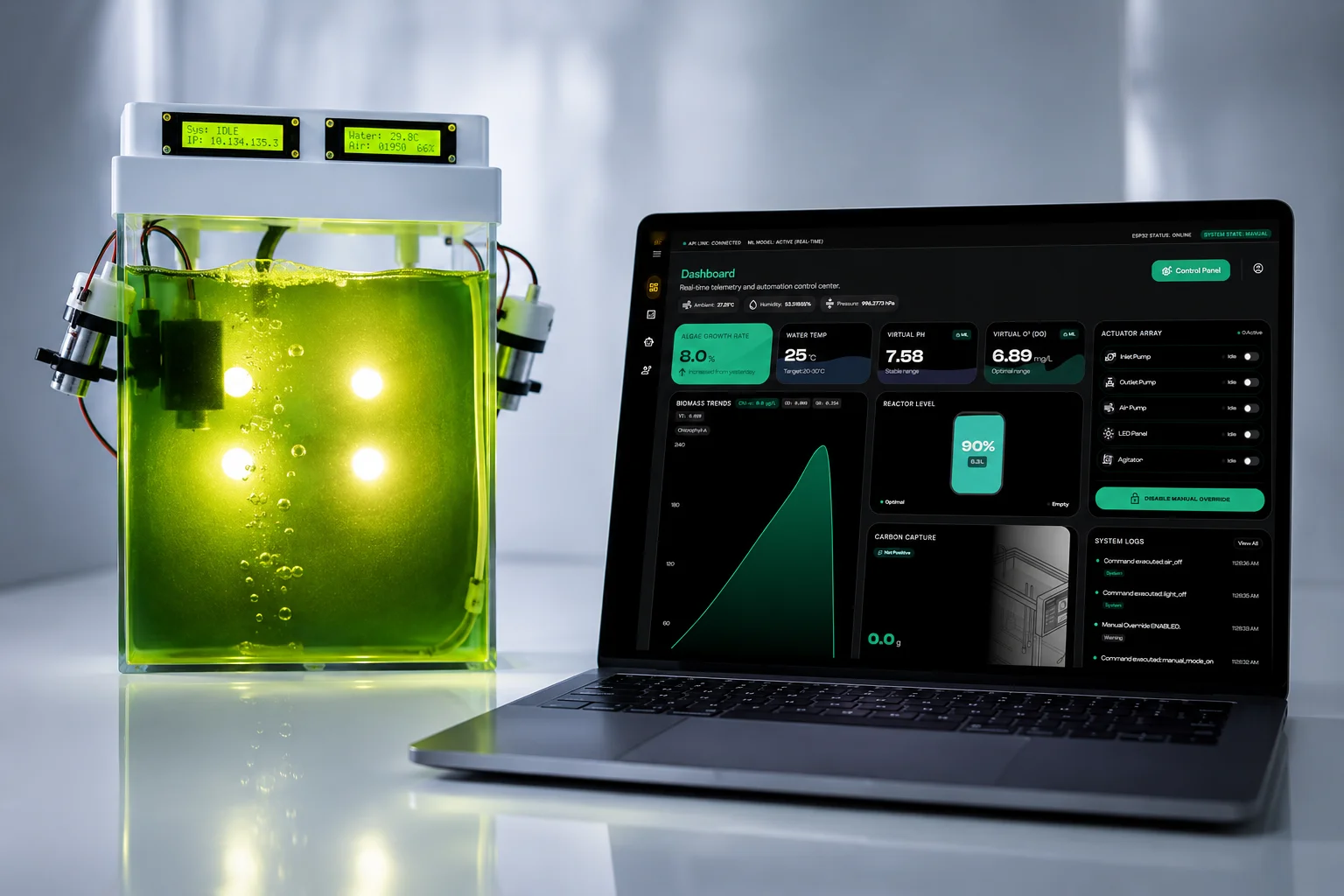
Built on a decoupled architecture, BioArc streams real-time, sub-second environmental and liquid metrics (temperature, humidity, pressure, optical density) from hardware to the cloud. By utilizing Paho MQTT and WebSockets, the Next.js frontend is instantly hydrated, allowing operators to monitor multi-axis telemetry seamlessly.
Industrial setups typically rely on expensive $5,000 spectrophotometers to track chlorophyll density. BioArc replaces this with a low-cost RGB sensor paired with our proprietary Green Excess Index (GEI) math model. The FSM intelligently pauses aeration bubbles, captures light-normalized samples, and automatically triggers harvest cycles when culture density reaches optimal levels.
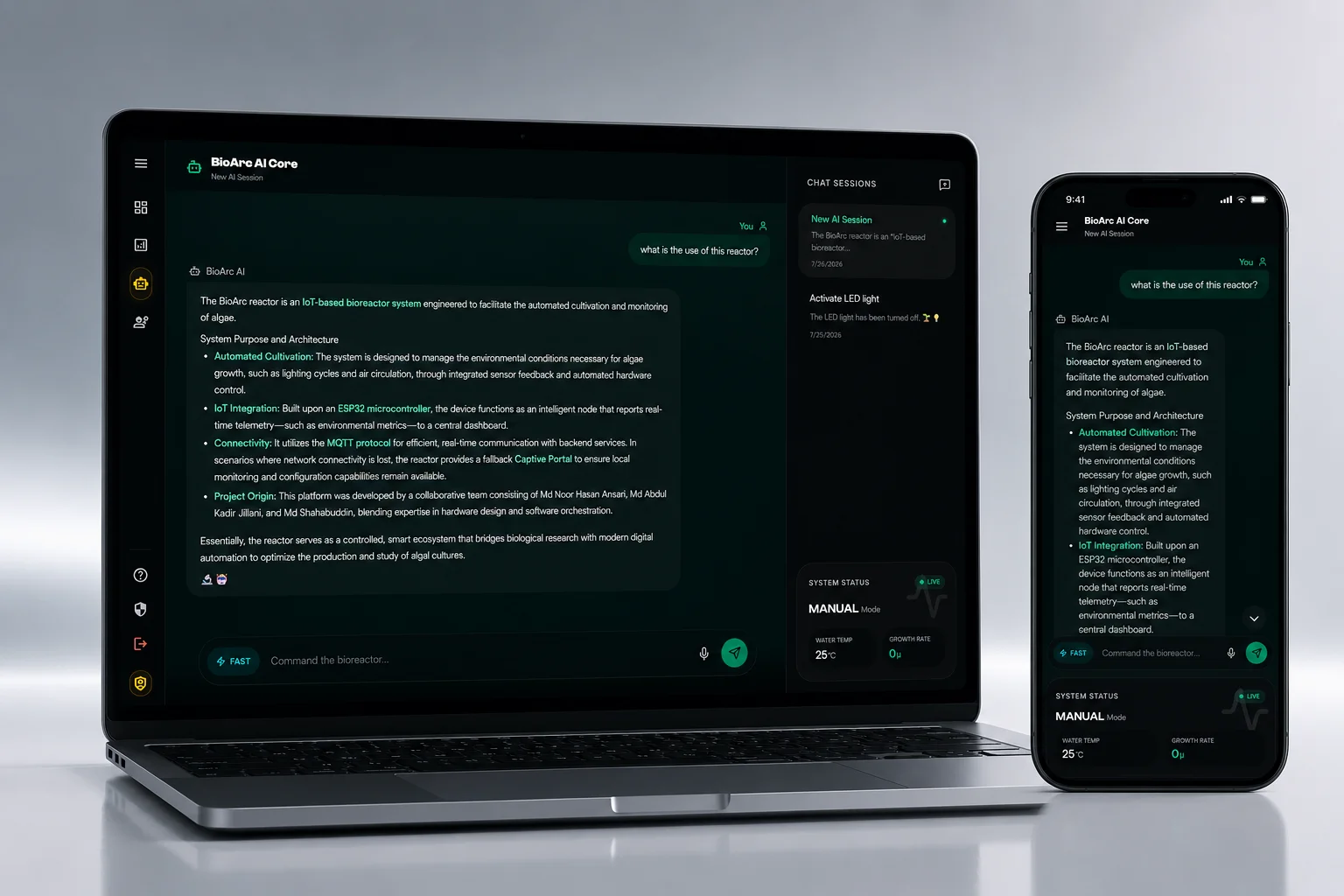
Operators can speak or chat directly with the bioreactor! Integrated with Google Gemini Live Bidi-Streaming over WebSockets, the AI can query historical telemetry and execute real physical actuator actions (like toggling valves or adjusting the photoperiod) via autonomous tool calling—acting as a true laboratory copilot.
The physical controller runs a robust 8-state Finite State Machine (FSM) on an ESP32. If local internet fails, it falls back to a localized Wi-Fi Captive Portal for offline control. The web interface is built on Next.js 15 and React 19, featuring a state-of-the-art strict dark theme, glassmorphic cards, and resilient state management using Zustand for optimistic UI updates.

A modern, high-performance stack curated specifically for this digital experience.